

Skip to Main Content
The Review

24 hours with real estate startup Casalova

People

Category Archives: Blog Categories

24 hours with real estate startup Casalova

The real estate startup is located in downtown, Toronto — one of Canada’s most competitive real estate markets — which means employees have to always be on their toes since local listings can change in the blink of an eye.

Unlike some of its competitors, Casalova is a one-stop shop that brings together prospective renters, landlords and agents all in one place. Users who sign up get access to new homes and a certified agent, while landlords have their properties listed and also get a $100,000 insurance package so they can rest easy knowing that if a tenant damages their homes they won’t go into debt to fix it.

Here’s an exclusive behind-the-scenes look at the inner workings of Casalova’s team and their founder.

The agent: Jennifer Meade (9 a.m. to 12 p.m.)

jennifer_meade

Jennifer Meade, one of the company’s newest agents, knows all too well how volatile Toronto’s real estate market is these days. She’s seen up-close-and-personal the city’s property market jump more than 20 per cent in the last year, and more importantly, the impact it’s had on prospective renters and buyers.

“Everything moves so fast now,” she explains. “If you want something in this market you have to be ready to move quickly because property can go just like that,” she says while snapping her fingers for added effect.

For Meade, most days involve checking her email to see which new clients she’s been matched with through Casalova or connecting with new renters through her own personal network. Today her client, a nurse moving from Barrie to Toronto, is looking for a condo to call home in the downtown core, which Meade confesses “can be tricky” since the prospective renter’s 14-hour job makes it difficult to view properties during normal hours.

Today her day starts at 7 a.m. when she scours local listings for new condos. When she finds one that matches her client’s needs (in this case parking and access to shopping and entertainment) she calls the property manager to book an appointment and waits for her client to make the long drive downtown.

Two hours later she shows the nurse around a lovely condo near the city’s waterfront while rattling of its impressive amenities — inclusive gym, pool and hot tub, to name a few. It’s a one bedroom, 778 square feet, home that overlooks Lake Ontario. While Meade thinks she may have found her client the perfect home although she isn’t so sure and wants to look at a few other places before making a final decision.

Keen to see her client view as many places as possible she hails a taxi that will shuttle both of them to their next destination. She also informs the condo owner over the phone that her client is interested in the property but needs a little more time to make a decision. “It’s important to keep every door open,” she says with a smile while juggling two phones.

Two hours and three condo viewings later (a cancelled showing due to a lost lockbox means the day ends early) just reinforces how much her client loved the first apartment she viewed earlier in the day. Meade later makes an official offer that day with help from Casalova’s customer service team and then make plans to meet tomorrow to follow-up on signing details.

“It always feels good when you find the perfect home for someone,” Meade explains.

The front-line staff: (1 p.m. to 3 p.m.)

agent-picture-8-1

Naveed Marzook, Casalova’s vice-president of customer success, loves his job. It’s easy to see that he and his team shoulder most of the face-to-face customer and agent work the company deals with on a daily basis. Any questions about properties, or payment requests go through his team.

The customer service team also helps customers navigate the website if necessary and add new homes to the company’s growing list of real estate options almost hourly.

For all intents and purposes, Marzook and his team are like the swiss army knife of the company, although he refers to his team as the startup’s “helpers”. They go “above and beyond” what they’re expected to do all the time, he explains. “Everyone pitches in and we appreciate it.”

Marzook and his team believe that the company’s success boils down to the fact the team actually like working together. In an attempt to prove his point, he holds up a golden owl, fondly named Hooter, which is given to the employee who happens to “pitch in the most.”

Today it might be him, and the next day it could be Jess Shulist — one of his colleagues whose computer is decorated with Rihanna stickers and works with agents to get client documents ready.

“It’s a fun place to work,” Shulist says while looking fondly at Hooter. “I think it’s cool how we never forget to recognize how hard each other is working.”

The co-founder: Ray Jaff (3 p.m. to 8 p.m.)

19620388_235821490262563_763612435339947304_o

Ray Jaff wakes up at 6 a.m. everyday to workout. He works through company problems while running on the treadmill and brainstorms new solutions while lifting weights. “It’s what gets me through the day,” he explains.

The entrepreneur is dressed in a fitted oxford shirt and pleated pants, but says he would be just as comfortable in jeans and a t-shirt.

This afternoon he’s focused mostly on checking in with team members, going over the website’s latest updates and the company’s plans to move to a new office on the westside.

At a meeting with the team’s engineers, Jaff and the developers hunker down at their desk to come up with solutions and a tentative timeline for new product updates. Forty-five minutes later they’re done and the founder is already on his way to his next meeting. His phone blinks throughout the afternoon proving just how in-demand he is these days, especially now that the company has launched its services in Vancouver.

It’s a real coup for the startup, he says. “We’ve been working towards this for a while.” When asked how he manages to avoid burnout, Jaff merely laughs and shrugs. “It’s a team effort, we’re all working on this together and we aim to only hire A-players who are dedicated to the Casalova mission. It’s makes everyone’s life a lot easier.”

Later on the company’s real estate agents, front-line staff and Jaff convene to celebrate their quarterly wins at a complimentary lunch while munching on sushi, chips, cupcakes and champagne. Despite its seemingly small team, the event is an important way to show employees how much their hard work is appreciated.

“Casalova is like a family. We value everyone and just because the agents aren’t in the office with us doesn’t mean they shouldn’t be here with us to celebrate.”

The award categories include ‘Rookie of the month’, ‘hardest hustler,’ and ‘MVP of the month.’ After the awards are given out, Jaff motions for people to move to the front of the room for photos with the honourees.

Once the meeting is over, it’s back to meetups with staff, responding to more emails and later one-on-ones about Vancouver. It’s almost 8 p.m. by the time his day is finished.

As he readies his things to leave for the night the entrepreneur’s eyes are still glued to his smartphone.
From science fiction to science fact: Tech that actually exists

For many, it serves as an inspiration and more importantly a peek into what the near future might offer. Everything from smartwatches to relatable robots can arguably be traced back to a fictional piece of work.

Thankfully technology moves at breakneck speeds and what was once considered impossible has quickly become reality. If you’ve ever wanted your very own hoverboard or a robotic servant to call your own, you’re in luck. Here are some of the best fiction-influenced technologies that now exist.

Hoverboards

Fans of Marty McFly – the wonder kid from Back to the Future – can finally rejoice. The hoverboard that helped propel the smart-talking, wise-cracking teen to new heights is now a reality. In 2015, car company Lexus introduced its own version of the device that relies on “magnetic levitation” (read: magnets that repel gravity) to achieve lift-off.

Since then other companies have stepped up and created their own. U.S. startup Hendo Hoverboards introduced the world to its first levitating device on Kickstarter two years ago and since then has launched four different versions of the board that look and move like a traditional skateboard.

Embeddable microchips

In most dystopian movies, GPS-tracking microchips are tools oft used for nefarious reasons. Bad guys inject the tiny, plastic devices at underneath the skin of the heroic protagonist (or protagonists) in an attempt to track, manipulate and in some cases even kill. Thankfully, in real life, things aren’t so bad.

While tech startups (and a few forward-thinking innovators) have long flirted with the idea of embeddable tracking technology it’s only in recent years that it’s become a real possibility.

Wisconsin-based Three Square Market is one of the first in North America to provide its employees with tracking chips that allow them to enter and exit a building at will and make cashless purchases from company kiosks. The devices, the size of a single grain of rice, use radio-frequency identification (RFID) — the same technology found in key fobs and smart wristbands. While Three Square Market’s chips don’t include in-depth tracking by choice the Swedish company — called Biohax International — behind the device does include that feature in its other smart embeddable products.

The Jetson’s ‘Rosie the Robot’

Robots are all too often employed by Hollywood as a way to demonstrate just how modern and advanced a society is without being explicit. It’s a popular trope that can be found in Star Trek’s Data, Ava from Ex-Machina and even Arnold Schwarzenegger’s character in The Terminator. While the characters from our favourite science fiction novels aren’t feasible just yet, several companies have figured out a way to emulate some of their best features.

Sophia, a humanoid robot created by Hanson robotics, is as close as it gets to a Rosie from The Jetsons. She can converse in up to 20 languages, easily mimic human emotions, clean and respond to questions in real-time. Her skills have even garnered her a vocal and enthusiastic following online and since being launched last year has appeared at the UN, Jimmy Kimmel Live and CNBC.

Driverless cars

Hiring a human driver is so passé. If science-fiction movies are to be believed the best way to travel is with an artificially intelligent and self-aware driver behind the wheel. Knight Rider’s Michael Arthur Long and his trusty sidekick — the smooth-sounding Pontiac Firebird Trans Am — were for many the epitome for what a smart car should act like.

The growing roster of driverless cars on the market, unfortunately, lack the spunk found in KITT (the affectionate nickname for the car) but they do showcase some of the basics that consumers will likely want in a vehicle.

Google, one of the top companies in the AI driving market, has seen its cars rack up a total of three million self-driving miles so far. It’s autonomous fleet rely on sensors to differentiate between pedestrians, other cars and cyclists and can transport individuals to their chosen destination, just like KITT.


Parent trap: Here’s how entrepreneurs with kids make it work

Being an entrepreneur is hard, but being a parent (one of the toughest jobs in the world) and running your own business at the same time is even harder.

While most people would assume that combining children and a career in tech could end up being a hindrance, it’s actually a boost to an entrepreneur’s bottom line if they can manage to pull it off.

Children and careers can make the perfect combination


The startup life usually comes with late nights, negligible pay and unpredictable schedules. That added stress can easily become overwhelming. For some founders being a parent is a boon because it forces them to be smarter, faster and better at prioritizing what really matters in life and work.

“The best part is that you get to cut the crap out of your life — no watching YouTube or on Reddit when I’m at work,” explains Matthew Karabela, co-founder of Fetchit. The DMZ-based startup connects businesses and Canadians with pick-up drivers, truckers and other hauling equipment operators from across the country.

“Having kids teaches you how to give [work] your all when you have free time and really focus.”

Karabela’s company – which he describes as an “Uber for pickups and deliveries” – is especially unique in the startup ecosystem because two out of three of its founders are parents. “Not many companies have one founder with kids and we have two but it hasn’t stopped us from being successful.”

Since launching last year, Fetchit has seen its membership increase to 1600 users, partnered with over 20 businesses in Toronto, and now has approximately 220 drivers using its service. Despite its early success, the father of two is quick to admit that his company gains didn’t come easy.

Having an eight month old and toddler at home means he’s missed a few bed night stories throughout the year, which has also coincidentally made him a master at multitasking.

Changing nappies with one hand while holding town hall meetings or working late into the night to accommodate sick kids comes with the territory, he says. “It’s hard work, that’s true, but I wouldn’t change anything” he explains. “When you think about it like a business, raising kids gives you a better return in the long run. My family makes me a better person.”

Benefits of being a parent: Advice from the other side


Sharn Kandola, cofounder of real estate startup Feed Duck and mother of two, believes the difficulties that go along with raising kids sometimes overshadows how beneficial they can be for a founder’s business.

In the startup world, where networking is a crucial part of the biz, being a parent can open up social and professional circles in a way that cocktail mixers and after-hour meet-and-greets can’t. “You meet so many people just by going to parent events or school activities,” she explains.

Parenthood also helps entrepreneurs stand out among the competition and be a better boss.

“Being a parent gives you a better perspective, because you know what it’s like to lead and guide someone else,”

Kandola later adds: “If you’re an entrepreneur and a parent you can help support other entrepreneurs and your business as a whole because you spend so much of your time doing it at home.”

Secrets to success


For Karabela, balancing both worlds and the responsibilities that go along with it requires hard work. Unlike at regular nine-to-five jobs, sick leave is poor and maternity leave almost non-existent. Understanding your personal limitations, leaning on friends and making exceptions in the short-term to help your business get ahead should be a given.

Kandola agrees. The entrepreneur wakes up early so she can focus on her business and get a head start on the day. A 5 a.m. wake up call during the work week might be daunting for some but it’s one of the few constants in her busy, hectic life that ensures that her business doesn’t suffer if her family needs her.

“You make sacrifices for what matters. It’s no different from what other entrepreneurs have to do.”

Five scientifically proven ways to be more productive

It’s all too easy to get distracted or lose focus, especially when you’re an entrepreneur and juggling day-to-day responsibilities, client requests and company obligations.

Here are some of the best tips for tech entrepreneurs, backed by science, to help you get more done with what little time you have.

Take a break every 90 minutes


Having a hard time staying focused? A few mid-day breaks sprinkled throughout the day might actually help. While it may seem counterintuitive to step away from your desk when you’re in the middle of a big project a 2011 study from the University of Illinois found it may be the best thing you can do for yourself and your coworkers. So called ‘mental interruptions’ throughout the day can not only help startup employees who spend most of their days at a desk avoid burnout and also boost long-term productivity. Next time you’re feeling exhausted instead of that extra shot of espresso just take a simple 15-minute break instead and you’ll be surprised by how much you’ll get done.

Divvy up large tasks into smaller tasks


You know that satisfying feeling you get when you finally cross something off your to-do list? Well, you’ll be able to do more of that and actually see better results if you make sure to follow this golden rule.In 2014 American psychologists from Pennsylvania University discovered that cutting up huge projects into bite-sized tasks helps large teams finish their work faster and as a result rewards our brain’s pleasure centre, which in return pushes employees to do better work throughout the day. An added bonus: Completing smaller tasks also provides an easy way for team members to feel like they’re making progress and achieving a notable goal.

Skip the multitasking


The ability to multitask is often viewed as a desirable trait that most entrepreneurs take great pride in. However, what most don’t know is that working on more than one task at a time actually lowers overall work quality since brains aren’t designed for “heavy-duty” multitasking over an extended amount of time.Noted psychologist Robert Rogers found that on average it took individuals twice as long to complete tasks to a satisfactory level when multitasking compared to when they focused on one task at a time.

For entrepreneurs living in today’s techy world where time often equates to cold, hard cash this can be the deciding factor between what makes or breaks a company. Rogers suggests entrepreneurs instead assign time limits for certain tasks so they can concentrate on completing projects to the best of their ability whenever possible.

Turn off pop-up notifications


There’s nothing more distracting than battling a series of non-stop notifications when at work. Whether it’s email pop ups, Slack messages or IM pings, these types of digital interruptions can easily disrupt and distract even the most dedicated workers.A study from Florida State University suggests that notification and text messages can be just as distracting than phone calls for workers and those around them. One of the easiest things to do is to simply turn on ‘Do Not Disturb’ features during working hours or assign a member of your team to handle these types of on-the-go requests.

Skip email and converse in person


The amount of time wasted on email threads can be infuriating. Sometimes it can take minutes (if not hours) for workers and colleagues to respond to simple questions, which wastes time and often impedes other important tasks.One practical way to avoid this is to prioritize conversing in person or over the phone about important issues. A story published in the Harvard Business Review found that emails often resulted in more wasted time than phone calls or emails. Next time you have an important question about a sale or client, try getting up and visiting your colleague at his or her desk or picking up the phone instead of emailing them.

Is Rewordly the savior content creators have been searching for?

Traditional news publishers are fighting an uphill battle these days.

A 24-hour news cycle, online social media platforms that regurgitate free news and a decline in advertising rates have created a hurricane of hurt for the news industry, but today’s biggest companies refuse to go down without a fight.

Media companies – like Toronto Life and Now Magazine – are looking for new ways to make money and turning to tech startups for a helping hand.

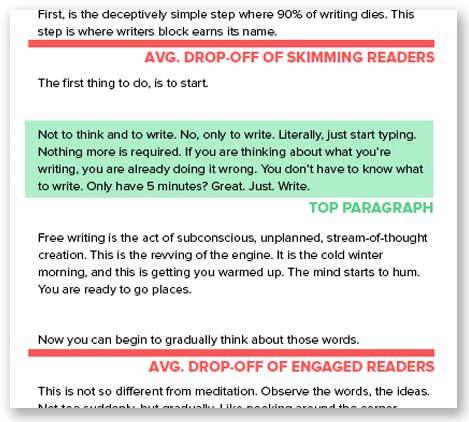
Enter: Rewordly, a Toronto-based tech startup. The company has created an AI-powered product called Readefined that lets publishers better gauge how readers engage with online stories, determine how much content users read in real-time and what multimedia aspects of a story people actually like via behaviour tracking software. These important metrics are the cornerstone for any publisher since it helps not only attract high quality sponsors but new advertising partners.

“We have a vision to truly transform– and help –  the publishing world,” says Mario Vasilescu, the company’s co-founder and CEO. “We’ve won some awards and are in discussions with Canada’s top four publishers and associations from around the world. It’s still early days, having just launched.”

A closer look at Readefined


Here’s how the platform works: A user signs up at Readefined and installs the company’s tracking software or downloads the official WordPress plugin.
Afterward the software starts interpreting patterns for every person that visits a publisher’s page and can even make AI-based suggestions about what writers can do to improve their content before they publish future stories.

dropoff

The company is currently in beta and working towards a mid-August launch, but for now publishers with views under 500,000 per month can sign up to use its software for only $19 per month. Companies with more readers are charged on a per view basis.

For Vasilescu, his company’s product is a way for newspapers – and content creators of all kinds – to truly understand what readers want in the digital age. No more guessing and conjecture.

Of course, the startup’s team has never worked for a newspaper, but they understand the difficulties legacy newspapers can face. Adapting to a changing industry is something Rewordly is all too familiar with. The company has undergone several pivots since it launched in 2012.

“We’ve had a winding journey. The initial product took shape while working at a management consulting company in Paris. It was really shaped by seeing how inefficiently content was managed internally and externally,” explains Vasilescu.

“As naive first-time founders, we initially built a single product that – with the benefit of hindsight – we now see was attempting to solve all of the world’s content-related issues in one behemoth of a platform. People got really excited about it, but would be totally overwhelmed using so we went back to the drawing board and created this.”

How are publishers adapting?


For most publishers, it’s the company’s machine learning software – which gets smarter over time as it processes different reading behaviour and content – that could provide the most return. Keeping readers online longer, more engaged and even being able to predict what will work best is crucial.

And a focus on superior engagement data couldn’t come at a better time. Online advertising is now under attack. Over $7 billion in click fraud is reported every year. Meanwhile, over 50 per cent of online users are using adblocking software and a little over one-third of traffic is fake, according to a Wall Street Journal story.

“Now is the time,” Vasilescu adds. “We’re ready to change how the publishing world works for the better. We’re excited to see what comes next.”

The startup lessons today’s top shows can teach you

Whether it’s a killer queen bent on reclaiming her ancestral throne or complex villains wrestling with their humanity, there’s a lesson for every entrepreneur in this year’s crop of popular TV shows. These programs are more than just entertaining; they provide inspirational examples (and in some cases cautionary tales) that will make any dealmaker, founder or mogul-in-the-making a better businessperson.

Here’s a look at the best fictional shows on right now and how they can help startups up their game before it’s too late. (Warning this post may contain tv spoilers).

Game of Thrones

Lesson: Find allies with similar goals

via GIPHY

It’s hard to imagine how a show about a medieval (yet magical) world inhabited by dragons and the undead could provide any real value for entrepreneurs at first glance, but the HBO show has a lot to offer.

Exiled princess Daenerys Targaryen, one of the main characters, is on a mission to reclaim her throne, which often pits her (and her army) against assassins, city uprisings and family betrayal. Her closest friends help her navigate dangers at every turn and without them it’s all too clear that this inexperienced warrior would surely have died long ago.

Like Targaryen, entrepreneurs should seek out experienced allies who can help guide, advise and nurture their ambitions. Forging alliances with the right people (and investors) is an important part of turning an idea into a million-dollar product.

Orange is the New Black

Lesson: Do your due diligence

via GIPHY

While betrayal, sleepless nights and poor diets perfectly sum up the day-to-day lives of the fictional characters on this Netflix show it could also easily describe the lifestyle of many early-stage entrepreneurs and acts as an important lesson for new startups hoping to find success.

The award-winning Orange is The New Black tells the story of inmates at Litchfield — a minimum-security, women-only prison — who must deal with everything from food strikes to abusive guards.

The show’s protagonist Piper Chapman is sentenced to jail for criminal conspiracy and money laundering charges early in the series and throughout her sentence learns, the hard way, how important it is to do her due diligence when picking friends and allies in jail. For instance, her failure to properly vet friends resulted in one later stealing her money from a short-lived prison panty business in season four and later time in solitary confinement. Entrepreneurs should look to Piper Chapman when bringing on new talent. It doesn’t hurt to make sure your staff are trustworthy and the people you partner with are worthy of your time.

Glow

Lesson: Don’t be afraid to reinvent yourself

via GIPHY

When you’re an entrepreneur and things don’t go your way it’s all too easy to end up wallowing in self-doubt. Failure, at any stage, is a gut-wrenching pill to swallow. Founders in need of inspiration about what to do if their company flounders should look no further than Glow, a fictional series about 1980’s female wrestlers in the U.S.

In the show failed actress Ruth Wilder decides to reinvent her career by taking on a role in a low-budget, traveling wrestling show. While wrestling isn’t exactly what she had in mind when she left her small town it turns out to be her biggest break thus far and finally gives her the success she craves. Like Wilder, entrepreneurs shouldn’t be afraid to pivot their business and use the skills they already have in their arsenal to start again.

Silicon Valley

Lesson: Always remain professional

via GIPHY

In an industry that’s consumed with power, prestige, and pride it’s easy to forget that one wrong move can throw an entire company into chaos. HBO’s Emmy-nominated Silicon Valley showcases just how complicated the startup world – and the individuals who work in it — can be. Egos can easily get in the way of success and threaten future opportunities.

The unforgettable Erlich Bachman is the perfect example of someone with an oversized personality that lands himself, and the company he represents, in hot water. His crude remarks and frequent off-the-cuff observations have alienated not just his coworkers at times but potential investors too. It’s too difficult to truly discern how successful Pied Piper — the company he works for — could have been if Bachman had been a little nicer in his dealings with investors and workers, but in a town where who you know is just as important as what you know it’s obvious it couldn’t have hurt the company’s chances either.

Westworld

Lesson: Keep employees happy and engaged

via GIPHY

Employees are the lifeblood of any company and Westworld knows that better than most. For most startups, it would be difficult to create, sell and promote any product without great staff, but for Westworld it would be almost impossible.

In this fantasy show about a futuristic amusement park where wealthy tourists can shoot, kill and otherwise abuse humanoid robots that act out western-influenced situations, employees represent more than just tools. They’re robotic staff who are the main attraction, keepers of the park and entertainment all rolled into one, which is why it came as no surprise to fans that they later revolted and attacked their creators.

When the park’s poorly treated robots go on a murderous rampage at the end of the series it’s an accurate, although unrealistic, representation of how a company call fall apart when its team aren’t treated fairly.

The top 6 apps entrepreneurs need to improve productivity

Staying productive isn’t easy. Especially when so many of us are bombarded with a steady stream of notifications, breaking news and emails every day. Is it really any surprise that overall productivity is on steady decline these days?

It can be difficult for even the most dedicated worker to stay on track in the face of so many distractions, but for entrepreneurs — who are expected to juggle multiple responsibilities alongside financial pressures and few resources — staying productive can be an almost hellish task.

If you’re looking for ways to combat distractions and improve your work efficiency, here’s a list of the most popular (and little known) apps that will change how you work for the better.

Awesome Screenshot

For developers and designers, it can be hard keeping track of the minute changes that seem to crop up on a daily basis. Projects that require group input often involve sending blueprints or mockups to group members that can end up clogging up inboxes or, in some cases, being ignored entirely.

Awesome Screenshot has found a way to get around that problem using its unique software that lets individuals snap a picture of a project that colleagues can then use to add comments, edits and even blur out sensitive information. These images are saved to an external database, saving crucial email data and giving internal team members or clients a chance to review documents at their leisure.
Where to get it: Find it online and Google Play

Streak

This fairly new plugin may not be widely known, but is definitely an app designed with entrepreneurs in mind. The platform turns your Gmail account into a powerful tool that lets any team member process sales, track product development and group customers into custom boxes to make it easier to contact and analyze.

Its free email templates and in-depth reporting function make it a great system for startups with limited funds.
Where to get it: Find it on the Apple store and Google PlayMove — daily activity reminder

Taking the time to maintain physical health is important. While most apps concentrate on ways to better manage our time, it’s been proven that physical activity can not only increase productivity, but provide long-term mental health benefits.

One of the easiest ways for entrepreneurs glued to their computers to fit in some daily exercise is to take walks. The iPhone app will remind you to take regular, active breaks throughout the day and record your progress over time. It also plays double duty as a gym buddy that features over 300 fitness exercises and the ability to create your own custom circuit training.

For Android users, an app called ‘Move It’ offers up many of the same features listed above with the added option to sync it with Google Fit to provide better step data and calorie counting.
Where to get it: Move: Find it on the Apple store and online. Move it: Google Play store

Have you ever had a great, life-altering idea pop into your head, but forget it because you didn’t have some way to write it down?
Well, Evernote may be able to help fix this annoying problem. The free platform helps users work smarter by letting them create customized to-do lists, upload notes from their mobile device, which can be shared with other users, and even craft personalized audio checklists.
Where to get it: It’s available via the Apple store, Google Play Store and online.

Asana 

Asana is the swiss army knife of online management tools. This oddly named application helps you manage tasks, oversee work projects from shared dashboards and track conversations all in one place.

It also allows you to collaborate with team members, assign tasks and schedule due dates so colleagues know exactly what to do and when to do it. Track progress on shared projects and chat about updates with other members all in one place so you can finally ditch those never-ending email chains for good.
Where to get it: Get Asana by going on the web, from the App store & Google Play Store.

Expensify (tracking expenses)

Keeping track of your employees’ financial statements and your receipts can be headache inducing, but Expensify wants to be the antidote to your money woes.

The app’s algorithms not only analyze company expenses in real-time to combat fraud,but also detect which items need an extra pair of eyeballs, such as managerial approval, if the purchase is sensitive in nature or exceeds set company limits. Expensify’s SmartScan features allow users to take pictures of receipts while on the road that are then automatically uploaded and saved indefinitely.

The best part is that it can be integrated with financial products offered by firms like QuickBooks (small business accounting platform), Zenefits (HR management software) and Xero (a data management software company).
Where to get it: Find it online, the iTunes store or Google’s app store.  

Why flashy perks just ain’t enough to keep employees happy anymore

Tech-focused startups are well known for their outrageous perks. These hip (and often young) companies have everything you could want in a workplace: Flashy game rooms, free food, foosball tables and more.

While it may seem unusual, these benefits are about way more than just bragging rights. These perks are designed to help millennial-friendly startups retain top talent in a competitive industry that is exposed to non-stop change and help its workers create a tight, thriving community; a must-have for successful companies.

But are these utopian-like perks really enough to keep workers happy and, more importantly, retain the best talent? Maybe not. According to a recent Gallup poll millennial workers, who make up a majority of today’s workforce, prioritize professional growth and developmental opportunities over glitzy benefits and free snacks.

It’s a fact that hasn’t gone unnoticed by some of today’s biggest blue-chip firms and startups alike that, in an effort to do better, are reevaluating what type of perks are offered.

For Ingrid Yu, a communications manager at Toronto-based startup Figure 1, the best way to do this is obvious: Companies need to focus less on sharing the unusual benefits (like free food) and concentrate on tracking what works best for their employees’ long-term goals. It’s a lesson her company learned on the job and has worked to maintain over the years as the employee count grew from a modest staff of five to over 50 around the world.

“Figure 1 grew significantly over the past couple of years …. maintaining our culture requires a conscientious effort, of course, but having people who embody Figure 1 values — empathy, open-mindedness, and continuous improvement — makes the job so much easier.”

The case-sharing medical startup (sometimes called the ‘Instagram for doctors’) has perfected its community building and one-on-one opportunities with executives.

Yu also believes it’s not impossible to inject startup culture into your workplaces, but that it should be done the right way. The best offices meld the best parts of traditional workplaces (clear paths for upward mobility, long-term stability) with startup culture (flexible work hours, performance bonuses) for success.

“We’ve tried to take the best of startup culture, leave the worst, and add what is uniquely our own,” she explains. “What really gives us a vibrant company culture, I think, is how valued each individual is made to feel,” she says. “We send everyone (not just senior leadership) to conferences for their professional growth, have bi-weekly one-on-ones, and do monthly lunch and learns with fascinating people from all disciplines.”

Promise Phelon couldn’t agree more. The CEO of Tap Influence, a San Francisco-based marketing company, believes that an overemphasis on company perks is detrimental to a startup’s culture.

“Of course, startups need to offer certain benefits in order to attract and retain talented and ambitious employees,” she explains to Fortune magazine. “However, it’s more important to focus on developing an enviable culture and allowing the perks to be an extension of it—not the other way around. Perks are not a replacement for a strong culture.”

At the end of the day the most important thing is to make sure there’s value added to any offerings provided to employees, Phelon says. “…it’s more important to focus on developing an enviable culture and allowing the perks to be an extension of it—not the other way around.”

Yu agrees. Ditching the extras might also end up making your company more productive in the long run. “If you’re serious about what you intend to accomplish and culture you want, you should be able to create a focused environment,” she adds.

“Cut the distractions—including the ping pong tables—and let people go at a reasonable time so they can lead their lives outside of the office. Then organize occasional activities to bring the team together outside of work, perhaps a weekly cocktail night, a run club, or whatever interests them.”

4 must-read books for every entrepreneur this summer

If you’re looking for a great read for your next commute, something to ease your time in between flights or just a book to unwind with you on your next summer vacation, these page turners are sure to inspire and entertain.

No one said being an entrepreneur is easy, but with the right advice (and book) the possibilities are endless. Whether you’re a seasoned entrepreneur or aspiring business owner, there’s something you can learn from this reading list, which is complete with tips, lessons and facts from the most successful business owners in the world.

Tools of Titans by Tim Ferriss


After spending years interviewing celebrities and successful entrepreneurs for his self-titled podcast, Tim Ferriss finally decided to write a candid (and at times somewhat provocative) book about it all. The self-help guide combines the best lessons, tips and advice and routines into an easily accessible read.

Some of the most prominent names included in this tell-it-like-it-is story include Jamie Foxx, Arnold Schwarzenegger and top investor Chris Sacca. Although, Ferriss is no slouch either: The well-known entrepreneur is an early-stage technology investor and advisor for Silicon Valley heavyweights, such as Uber, Facebook and Shopify.

Why you should read this book: What sets this book apart? It’s an all encompassing toolkit full of tricks, recommendations, strategies and philosophies from some of the world’s most successful entrepreneurs. Bonus: At 707 pages, it’s a nice, quick read. Get it on Amazon while you still can.

Unshakeable by Tony Robbins


By all measures, Tony Robbins didn’t have a very pleasant nor easy upbringing. An absent father and abusive mother meant the motivational speaker grew up in what he describes as a “chaotic” and “abusive” household.

Despite skipping college and, a couple of lost years spent working as a part-time janitor, he later went on to launch a successful self-help business and work as a coach, businessman and New York Times bestselling author.

His latest book called Unshakeable is a summary of interviews with 50 of the world’s most successful investors and full of great nuggets about what entrepreneurs should do when things go wrong. Fighting off bankruptcy? Not sure how to boost market share? Struggling to hold on to investment opportunities? Then this condensed read is for you.

Why you should read this book: Robbins knows his stuff. The NYT-bestselling author is the author of over six books and throughout his life has founded over a dozen companies. If you’re looking for ways to stay sane in the non-stop world of business or just hoping for lifestyle tips this it. Buy Unshakeable from Chapters-Indigo here.

Jab, Jab, Jab, Right Hook by Gary Vaynerchuk


A winning social media account is more than just developing high quality content, but also adapting it to several platforms and mobile devices. This book has some strong ideas that organizations must adapt as part of their social media strategy such as content placement, telling a cohesive story and focusing on benefits rather than selling. “It took thirty-eight years before 50 million people gained access to radios. It took television thirteen years to earn an audience that size. It took Instagram a year and a half,” Vaynerchuk says in his book. It also focuses on the importance of driving engagement with an audience and finding opportunities to build communities, which in turn, strengthens your brand. Buy it on Amazon here.

Why you should read this book: Skip all the ridiculous startup jargon and buzzwords and get straight to the point with Vaynerchuk’s fight-inspired tome. The venture capitalist — named to both Crain’s and Fortune’s 40 Under 40 list — knows what he’s talking about and has the insights necessary to take to turn any organization into a well-oiled, money-making machine. Find this must-read here.

Success never Smelled So Sweet by Lisa Price


From bankruptcy to successful entrepreneur, Lisa Price shares her story of how passion created “Carol’s Daughter,” a luxurious, all-natural line of bath and beauty products. With only $100 in cash, Lisa started following not only her heart, but her nose, as she started creating sweet scents that celebrities such as Jay-Z, Solange, Halle Berry and Mary J.Blige support and use religiously.

In the book, she walks the reader through her childhood with stories of her Trinidadian grandmother and a harsh school system where she was bullied. Her story is a reminder that success is attainable even when life throws many obstacles in the way. Currently, the company is valued at $27 million and was acquired by L’Oreal in 2014. From life advice to business tips, this is a light summer read with an extra dose of motivation. Regardless if it’s a morning commute or sunny day outside, this is your perfect summer-time read, grab it, here.

Why you should read this book: A good success story can be inspirational for anyone trying to find their path to success, especially when the author is now a multi-millionaire. As a young black woman in financial straits, Price’s story is encouraging and engaging as it reminds you to keep persevering. Get your hands on Price’s guide for success from Amazon.

Is your startup prepared for a PR crisis?

The startup world is no stranger to scandal.

Silicon Valley is riddled with the remains of startups and companies forced to close their doors after falling prey to scandal. This year a series of well-known companies have landed in hot water for everything ranging from sexual harassment allegations to discrimination claims.

So, why does this keep happening in tech? The answer is fairly simple: Fast-growing businesses are more likely to prioritize product over crisis communication plans since the former provides immediate returns. It’s kinda hard to showcase the benefits of a communication crisis plan when there’s no crisis on hand.

Fortunately, there are some easy things startups can do to get ahead of any potential problems. Here are three easy steps early-stage companies can follow courtesy of Erin Richards, a former public relations officer for CBC and founder of communications firm Hype PR.

Setting Yourself Up For Success

For startups on a shoestring budget, time is a valuable resource that’s always in short supply. It’s easy to see why some would rather spend time networking instead of creating an in-depth framework for future issues that, technically, may never arrive.

As much as it might make sense to avoid all things PR related Richards believes it’s a bad idea. To combat any possible negative publicity entrepreneurs should invest in creating a strong brand before missteps occur in order to develop a trove of goodwill that can be leveraged to diffuse bad situations and grow the business.

“Most people don’t understand that public perception is a huge part of a brand narrative and story, and if those elements aren’t figured out, the media relations strategy is likely to fall flat.”

Creating long-lasting buzz isn’t an easy task, but entrepreneurs hoping to generate a positive public perception must focus their efforts on giving back to their community on a regular basis. This includes having team members volunteer to speak at conferences or community events to build good will. Local nonprofits and community organizations are always looking for guests to help teach and knowledgable experts are always in demand

Constantly Monitor Your Brand

Keeping tabs on how your brand grows and changes over time isn’t easy. It requires a lot of hard work, tons of follow-up and a keen eye that can easily differentiate between spam and important data, which is likely why most companies hire outside firms to perform this task.

Finding problems before they mushroom into bigger ones is an effective way to manage communication tragedies.

Companies need to be proactive and constantly be diligent. If they can’t afford to hire an outside team to monitor their brand they should make sure an individual is tasked with doing basic searches all the time.  Simply enlist someone on their team to monitor social media and online channels for news.

“They should have someone on the team allocated to the role of social and traditional media monitoring to ensure they are on top of any potential brand related issues that may arise,” Richards adds. “They could also look into having an independent consultant develop a PR plan and strategy that they could attempt to execute internally.”

Here are a few social media companies that startups can use to help find out if they’re being discussed online:

Twitter: Companies can use Twitter’s advanced search buttons to look for specific sentences, names and dates.

Facebook: It can be a little trickier for startups to find mentions of their brand on Facebook since many users take advantage of the social media company’s privacy settings.

Google: Getting alerts about when and if your company is mentioned online can be as simple as setting up a Google account. This platform doesn’t include social media platforms but does extend to blogs, news and websites.

Teach Your Team How to Interact With the Brand

For good or bad, founders are the de facto representative for their company. A startup can rise and fall based on the actions of a founding team member or staff. Teaching startup teams how to interact with customers online is vital, even when their “off the clock” or on their down time.

They need to remain professional at all times since now-a-days one embarrassing moment is merely a screengrab or email forward away from becoming PR nightmare.

“Once you become an entrepreneur, you become synonymous with your brand. Entrepreneurs should seek out mentors in the industry to help them network, grow and evolve and also look into how public figures they admire conduct themselves in public and in the media. Of course, there are also the obvious ones such as, watching the alcohol intake at professional events and avoiding weighing in publicly on potentially contentious issues.”


« Older Entries

Newer Entries »